

Get aggregates for a single time series using the OData services
In the asset-centric and data modeling OData services, when listing time series, the service exposes a function to retrieve aggregates for a single time series from CDF. To use the function in Microsoft Power BI:1
Navigate to time series table
In the Power Query Editor, navigate to a list of time series table using a Cognite Power BI connector.
2
Select the Aggregate function
Use filtering to find the time series you want aggregates from, and then in the Aggregate column, select Function.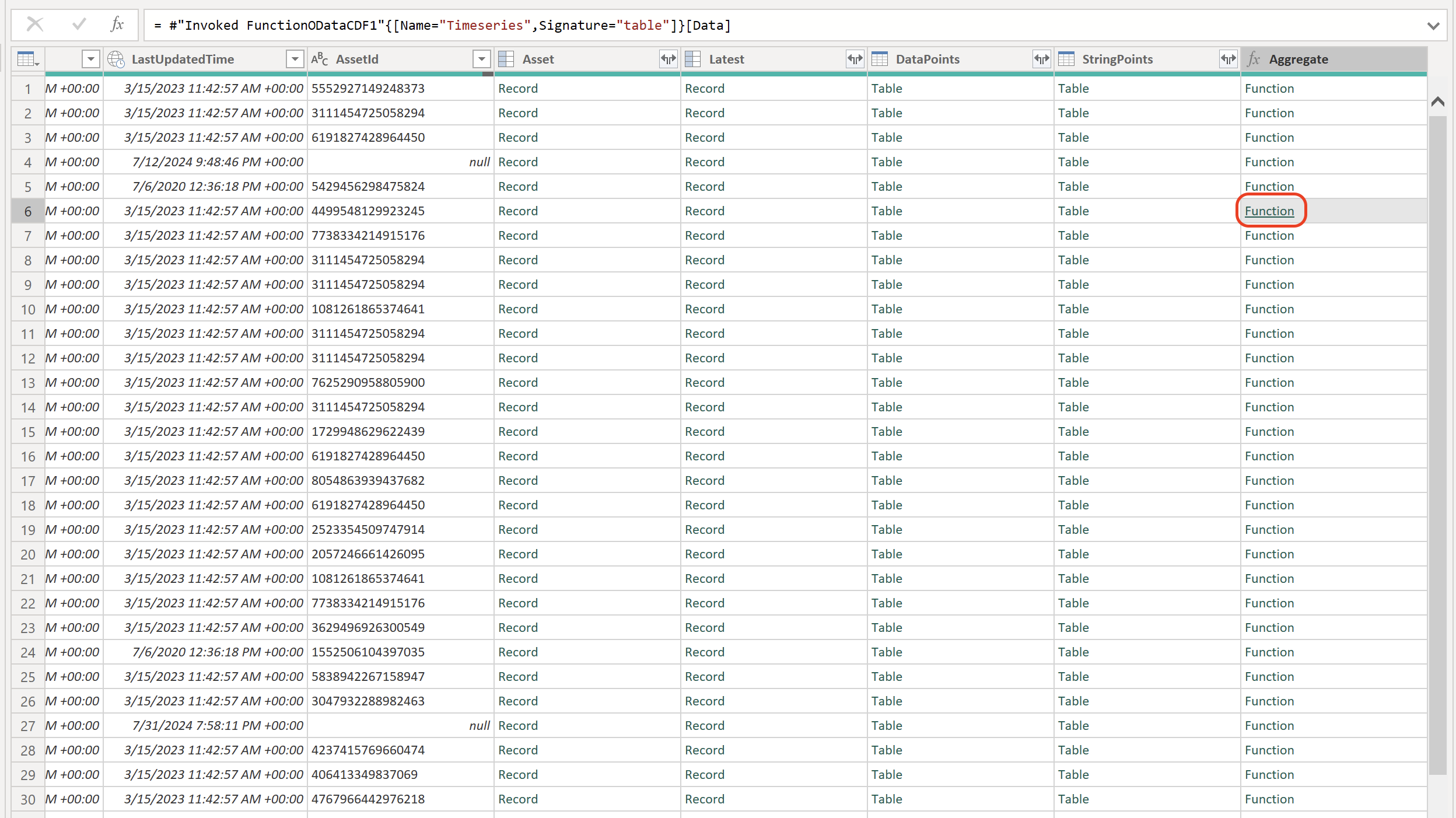
3
Configure time range and granularity
Specify the time range and granularity, and then select OK.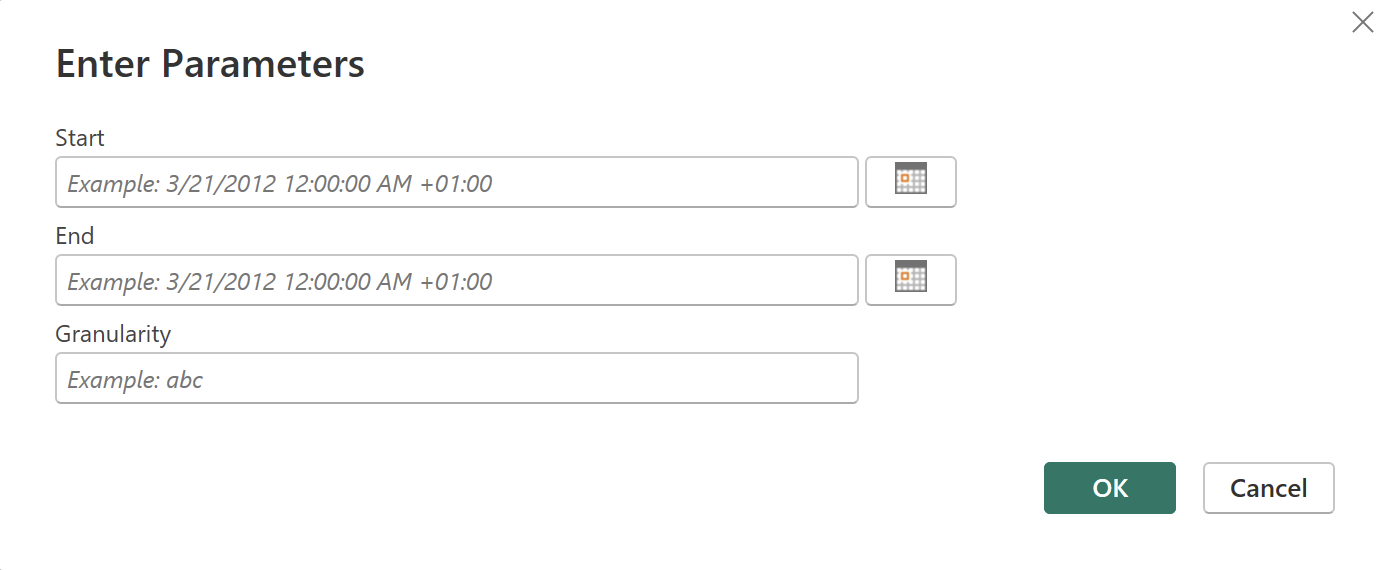
4
Review and finalize aggregates
The Power Query Editor displays a table with the aggregates for the specified time range. Remove the columns you don’t need, then select Close and apply.
Get aggregates for many time series
To retrieve aggregates from many time series in the same time range, use the TimeseriesAggregate function, exposed by the asset-centric OData service. Instead of calling the function on a single time series, create a time series table with all the time series you want to retrieve aggregates from. In Microsoft Power BI:1
Add Timeseries table andTimeseriesAggregate function as new query
Open a connection to the asset-centric OData service using a Cognite Power BI connector. Right-click the Timeseries table and the TimeseriesAggregate function and add them as new query.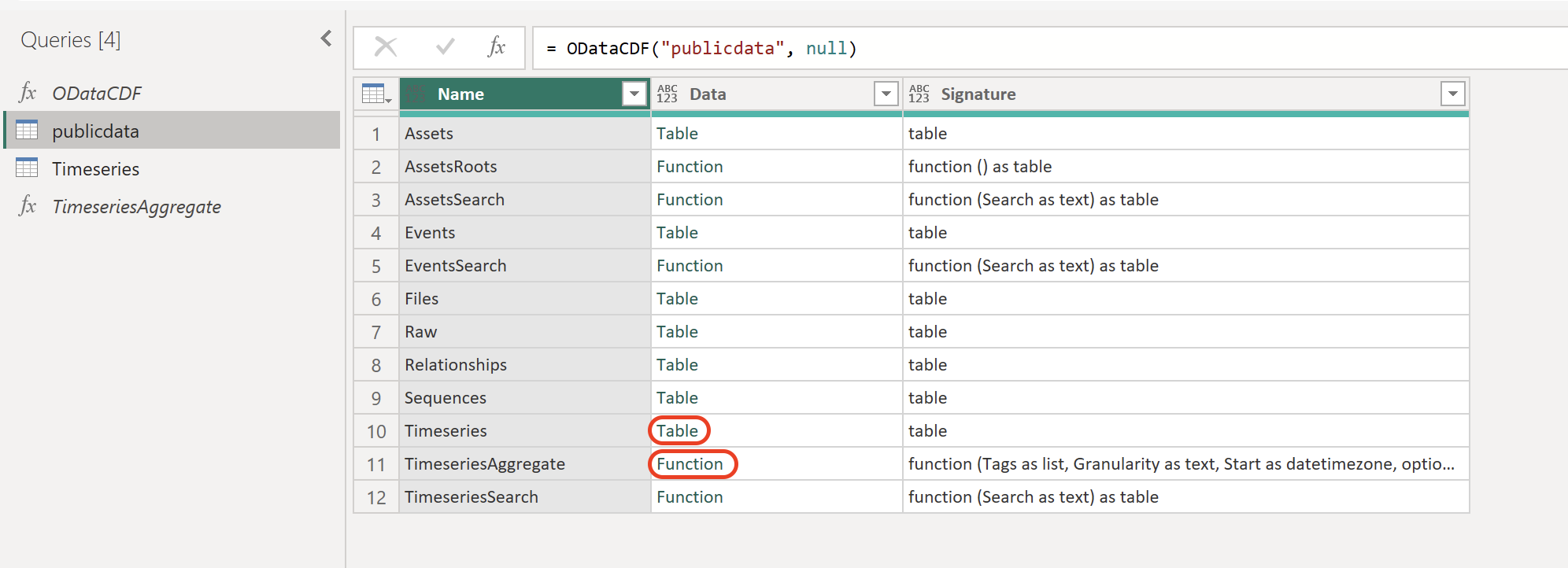
2
Filter time series
Use filtering on the Timeseries table to find the time series you want aggregates from.
3
Configure function parameters
In the Queries panel, select the TimeseriesAggregate function and set the granularity, start time, and end time. Then select Choose column.
4
Select time series column
In the Select Column window, select your Timeseries table and the Id column from the table to specify which time series to fetch aggregates from in CDF.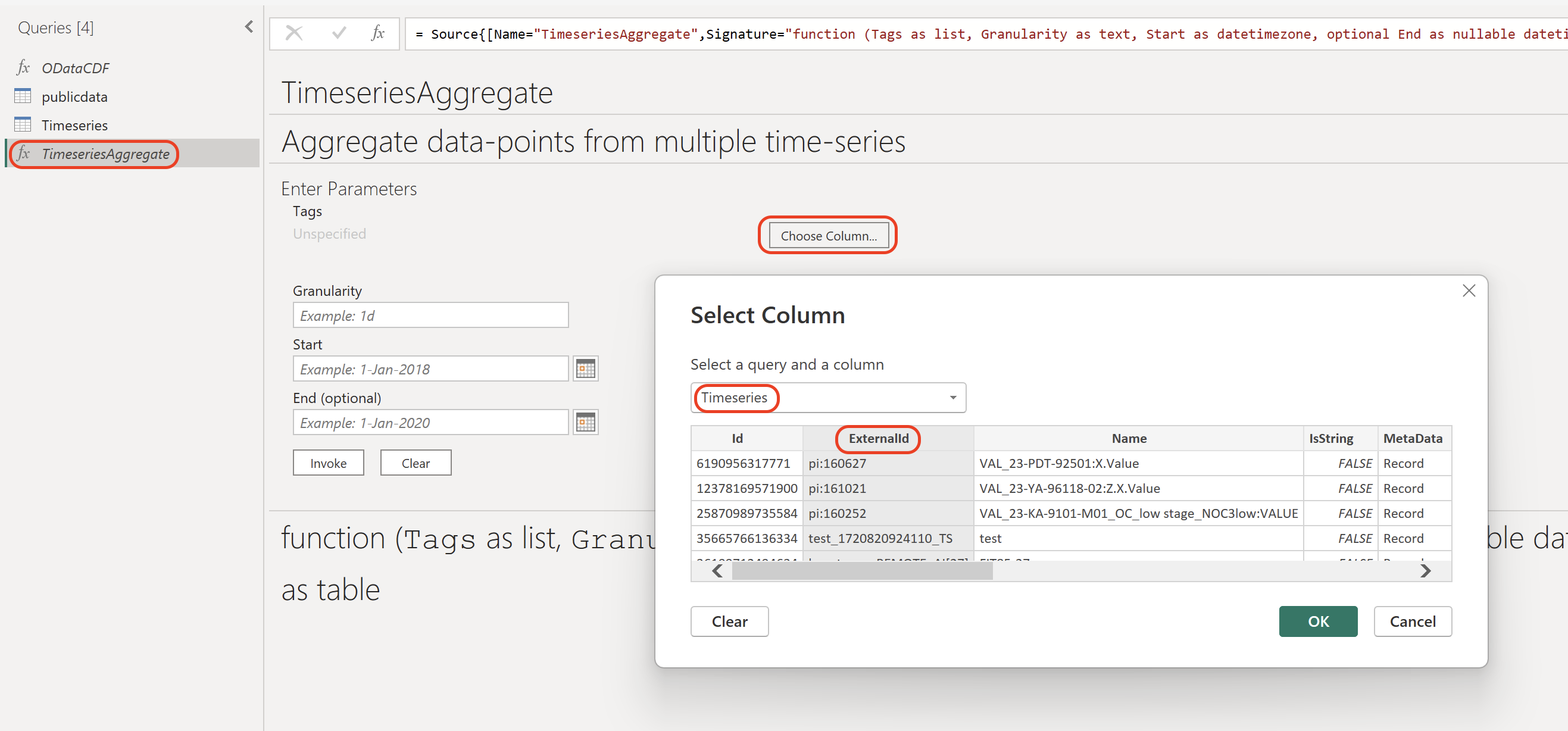
5
Invoke the function
Select Invoke to start retrieving the aggregates.
6
Review and finalize aggregates
The Power Query Editor displays a new table named Invoked Function in the Query panel with the aggregates for the specified time range. Remove the columns you don’t need, then select Close and apply.
If the TimeseriesAggregate function takes a long time to finish or fails after a long time:
- Make sure you have filtered the time series table to contain only the time series you need.
- Consider if you are using the right granularity. The granularity significantly affects the query performance.
- Request a realistic number of data points. Aggregating large numbers of time series with short granularity may return vast amounts of data points, and Power BI doesn’t handle many gigabytes of data in a single query.